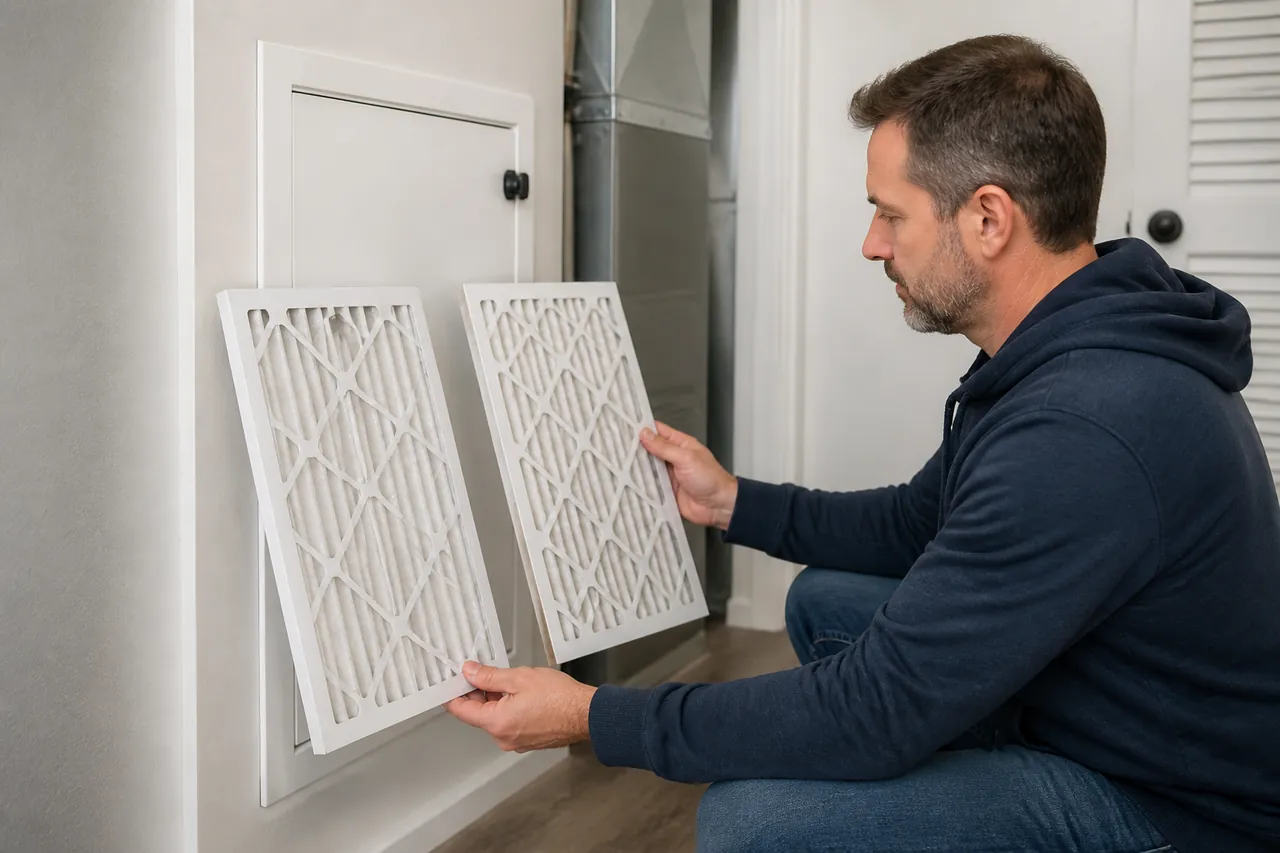
An HVAC filter looks simple, yet choosing and managing it responsibly requires more than remembering to buy one occasionally. The correct dimensions, installation location, system design, household conditions, and manufacturer guidance all matter. A homeowner’s checklist should support the equipment rather than turn filter changes into improvised maintenance or a search for the most impressive label.
Confirm the Filter Location and Size
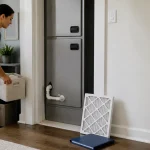
Identify every filter location that is intended for routine homeowner access. Some systems use a filter at a return grille, some use a cabinet near the indoor unit, and others have more than one return. Do not assume an empty slot or visible opening is meant to hold a filter. If the arrangement is unclear, ask an HVAC contractor to identify the intended locations.
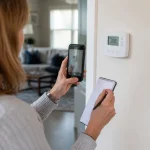
Record the dimensions printed on the current filter and, where available, the exact actual dimensions or product reference from the equipment documentation. Similar-looking filters may fit differently. Take a labeled photograph of the installed orientation from a safe position before removal, but do not open equipment panels or reach into an inaccessible cabinet.
Match Filtration to the System
Filter ratings describe particle capture, but a higher rating is not automatically appropriate for every HVAC system. Airflow requirements, filter surface area, cabinet design, and system configuration influence what the equipment can accommodate. Use the equipment manufacturer’s information and project-specific guidance from a qualified contractor rather than selecting solely from packaging claims.
If the household is concerned about dust, odors, allergies, pets, smoke, or another indoor air issue, describe the concern clearly. A filter can be one part of an indoor-air-quality discussion, but it should not be treated as a universal solution. The contractor may need to consider ventilation, moisture, source control, housekeeping, and system operation alongside filtration.
Build a Replacement Record
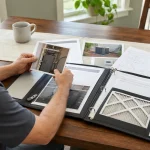
Instead of relying on a generic calendar rule, write the installation date on the filter frame or in a household maintenance record. At each check, note visible loading, unusual debris, recent construction, extended system operation, or a change in household conditions. Follow the appropriate product and equipment instructions for inspection and replacement intervals.
Keep a small reference showing filter size, approved product details, quantity, and location. This is especially helpful when multiple systems use different filters. Store replacements clean, dry, and flat so they are not damaged before use. Avoid buying a long-term supply until the size and suitability have been confirmed.
Change Filters Safely and Observe the Result
Use only the routine access method intended for the homeowner. Turn to the system documentation for the appropriate procedure, and stop if the filter is behind a service panel, difficult to reach, wet, collapsed, or surrounded by signs of damage. Do not run the system without its required filter while trying to compare airflow.
After replacement, confirm that the filter sits securely in the correct orientation and that the access cover closes normally. Record the date and any concern you noticed. A filter checklist is most useful when it combines correct identification, consistent records, and attention to system-specific guidance. It supports routine care while leaving airflow testing, cabinet changes, and internal equipment work to the HVAC professional.