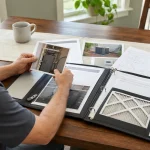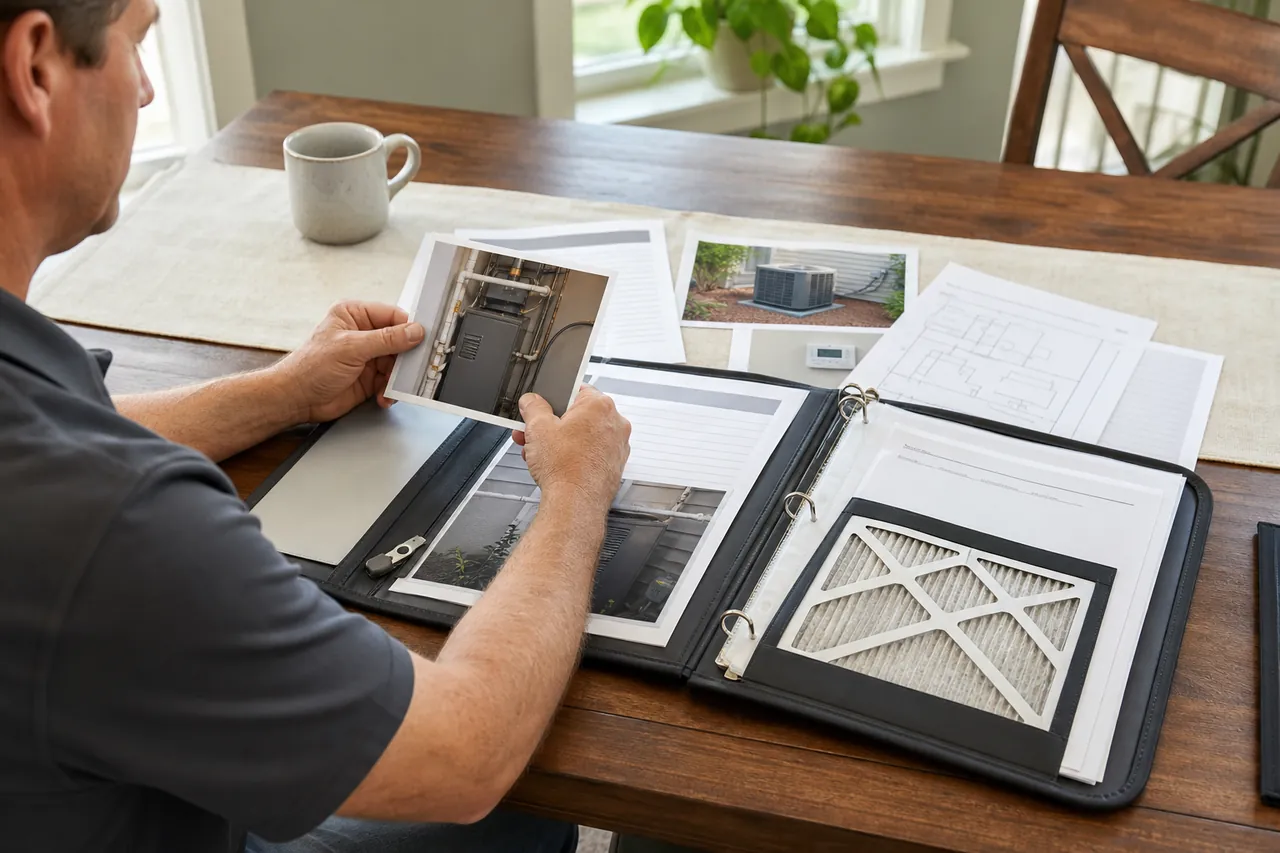
An HVAC project can leave behind more than new equipment or a completed repair. It also creates information the household may need for operation, maintenance, future service, and property records. When manuals, model photos, control notes, and project changes are scattered, even a well-completed job becomes harder to understand later. A concise handoff file keeps the final system and the agreed work connected.
Start With the Approved Scope
Place the final proposal or work description at the front of the file, along with dated approvals for changes. The record should show what equipment or areas were included, what remained in place, and any stated exclusions. Keep final invoices or completion summaries with the scope so someone reviewing the file can follow the project from authorization through handoff.
Do not discard earlier versions without noting that they were superseded. They can explain why the final result differs from the original plan. Mark accepted changes clearly and avoid mixing unapproved ideas or unrelated estimates into the completed-project section.
Record the Installed System
Include photographs of final model and serial labels taken from safe, accessible positions. Identify indoor and outdoor components, thermostats, and owner-facing accessories by location and by the rooms or zones they serve. Pair related components only as confirmed in the project documents.
Add manufacturer manuals and product information supplied for the installed equipment. A one-page equipment index can list the component, location, model, associated control, filter information, and document location. This makes the file useful without requiring anyone to search through every page for basic identification.
Preserve Operating and Service Guidance
Write down the thermostat settings or control modes explained at handoff, including any schedules, sensors, zoning, or seasonal modes the household will use. Record filter location and confirmed replacement details, normal homeowner access points, and the contractor’s instructions for routine observation. Keep technical service tasks separate from safe owner care.
If startup or commissioning information is provided, file it with the relevant equipment record. Add any defined follow-up visit or condition to monitor, including who is responsible and what observation should trigger contact. Avoid converting a casual verbal comment into a requirement; the file should distinguish documented guidance from household notes.
Document the Finished Condition
Photograph completed work areas, accessible equipment, controls, and restored surfaces where relevant. Label every image with the date and location. If an area was not opened, tested, repaired, or restored under the scope, record that limitation rather than implying the project addressed it.
Store a digital copy in folders that mirror the paper sections: scope, changes, equipment, controls, service guidance, and completion. Make sure another household member knows where both versions are kept.
Review the assembled file soon after the project while names and locations are still familiar. Correct mislabeled photographs and ask about missing documents before those gaps become difficult to reconstruct.
A useful handoff file is short enough to navigate and complete enough to support the next conversation. It gives a future HVAC contractor a reliable starting point, helps the household operate the system as explained, and preserves the boundary between completed work, remaining conditions, and future options.